Odkryj cel podróży Fažana
Fazana (Pula, Isztria)
Fazana egy kis halászfalu Isztria legnagyobb városa, Pula közelében, mely egyben a főkikötő is a Brijuni Nemzeti Park felé. Izgalmas város, lakosai a mai napig űzik hagyományos tevékenységeiket és élvezik azok gyümölcsét; halász és gourmet fesztiváljaival betekintést kaphatunk a régi időkbe. Itt alapították a „Sardela” halászakadémiát, ahol megtanulhatja, hogyan kell kifogni és jól elkészíteni a szardíniát. Fažana egy olyan hely, ahol az emberek még mindig hagyományos módon élnek és értékelik a természet gyümölcseit.

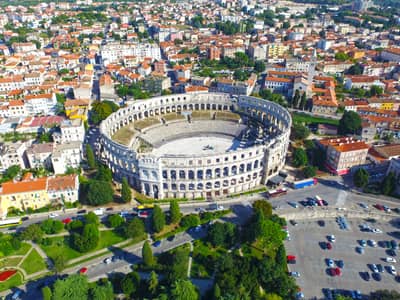
Arena Pula
The ground plan is elliptical, the longer axis measuring about 130 m and the shorter one about 100 m. Gladiator fights took place in the central flat area called the arena, while the spectators could sit on the stone tiers or stand in the gallery. It is believed that the Amphitheater could seat about 20,000 spectators. Local limestone was used for its construction. In the Middle Ages it was the site of knights tournaments and fairs. Today it is the venue for summer performances - the Film Festival, Opera Season, Equestrian Festival, concerts, ... which can seat about 5,000 spectators. The underground passages, once used by the gladiators, nowadays host a regular exhibition of viticulture and olive growing in Istria in ancient times. The exhibits include reconstructions of machines once used for the production of olive oil and wine (mills, presses, vessels) and amphorae used for storing and transporting olive oil and wine. The Amphitheater is situated outside the old city walls because of its size and geographical configuration. The road that leads to the center was constructed during Emperor Vespasian, after whom it was named - Via Flavia. Even today it represents one of the main city roads.
Forum Pula
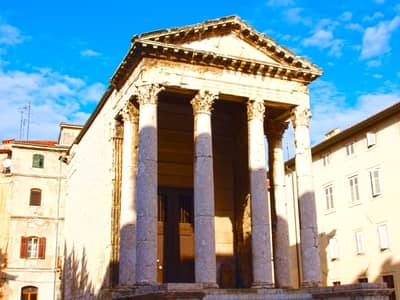
The Forum was the nucleus of city life, its religious, administrative, legislative and commercial center. On the northern part of the Forum stood two twin temples and a central one dedicated to Jupiter, Juno and Minerva. Today only the Temple of Augustus has been fully preserved while of the second temple only the back wall, built into the Communal Palace in the 13th century, is visible. Ancient remains of the Forum have been found during the construction of new buildings, the latest ones being "Agrippina and her time" (1st century AD). The remains have been partly restored and are now exhibited in the bank built on the site. Even today the Forum is the administrative and legislative center of the city. During the summer months it is the venue for numerous cultural events.
Lighting Giants
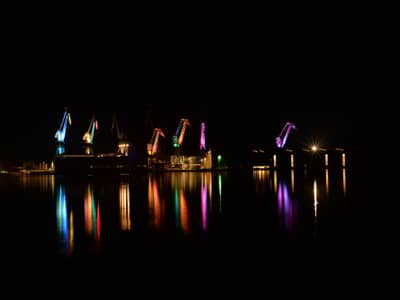
Don't miss Pula's latest attraction, a stunning lighting display at the city's circa 1856 Uljanik shipyard, one of the world's oldest working shipyards. Renowned lighting designer Dean Skira has lit up the shipyard's iconic cranes in 16,000 different colour schemes, which come alive four times every evening on the hour, starting at 9pm for 15 minutes.
Triumphal Arch of Sergius
The gate and wall were pulled down in the beginning of the 19th century as a result of the city expansion outside the city walls. The Arch was constructed in Corinthian style with strong Hellenistic and Asia Minor influences both in the method and ornaments. As the eastern side was not visible it has remained for the most part uncarved, while the western, town side is richly decorated. Today numerous cultural performances, theatrical and musical, are held on the square next to the Arch. The adjacent street is a shopping area.
_thumb_400x300.jpg)
04
Badel
Barbariga
Bi Val
Bođinka/Martulina
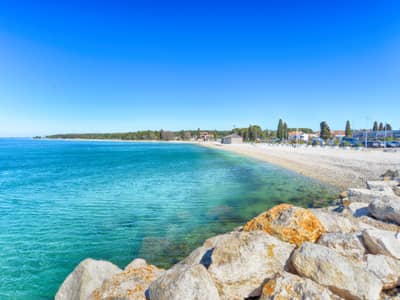
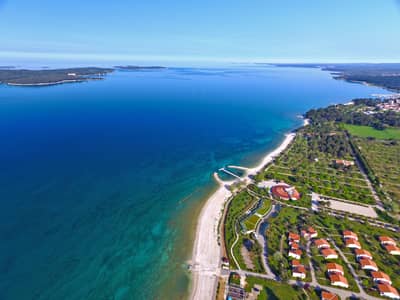
Bođinka and Martulina beaches (often called Martulinka) are part of a 2.5-kilometer-long, spacious coastal promenade in Peroj (Vodnjan municipality). These pebble-rocky beaches offer a quieter Istrian getaway with views of the Brijuni National Park.
Dječje igralište
MUP Valbandon
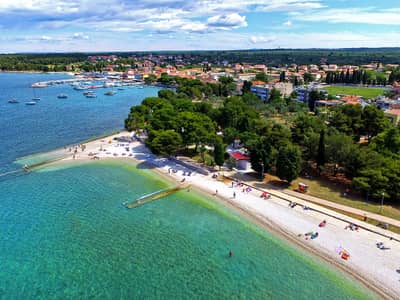
The Mup Valbandon Beach is the largest and longest beach in the Valbandon area, a village which is a part of the Municipality of Fažana. The beach has its gravel and concrete parts. There are entertainment activities for children and the possibility of boat rental on the beach. Above the beach you'll find coffee shop, store and restaurants. The long promenade along the coastline gives you the chance to enjoy the sunset while walking towards Fažana or Puntizela.
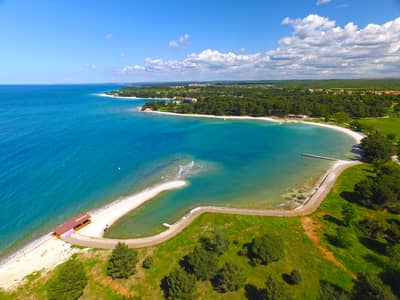
Pineta
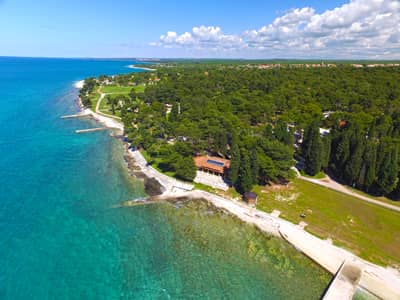
Portić
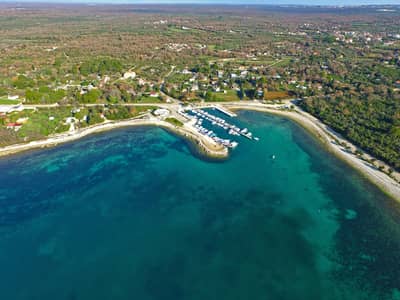
08
Crkva i samostan Sv. Franje
On the slope of the hill between the Forum and the upper circular street, lies the monastic complex dedicated to St. Francis of Assisi, built in the 14th century at the site of a previous cultic edifice.
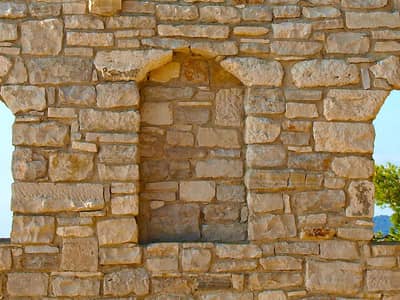
The Franciscan community was first recorded in Pula in the 13th century. The church was built in 1314 in the late Romanesque style with Gothic ornaments, as a firm and simple building of the preaching Franciscan order. The finely cut stone blocks used for building the walls speak of the skilful masters who took part in the construction.
Kapela Sv. Marije Formoze
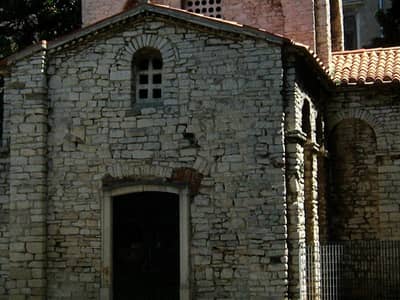
It is one of the two chapels built in the 6th century as part of a large Benedictine abbey demolished in the 16th century. The floor and walls were decorated with mosaics, some of which are now in the Archaeological Museum of Istria.
It was built in the style of Ravenna churches, the only difference being the use of stone instead of brick. Due to its dimensions, method of construction and good state of preservation, the Chapel represents an extraordinary architectural masterpiece of its time.
Katedrala uznesenja Blažene Djevice Marije
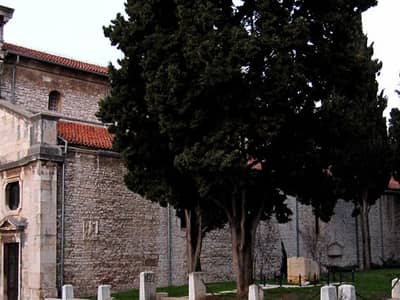
Within the city, along the main street that from Flavia Street leads to the Forum, stands the Cathedral of Pula. It was built at the site where Christians gathered already in the time of their persecution (until the 4th century).
With the ages it grew larger and assumed its present-day shape in the 5th century. It had an elongated oblong shape whose interior was divided by two rows of columns. The area around the altar was in the north, defined by a semi-circular podium with stalls for the clergy. In front of the altar area, behind it and around the very altar, still lie fragments of the floor mosaic from the 5th – 6th centuries, with memorial inscriptions of worshippers who paid for the decoration of the specific surface. The oldest preserved remains of the church wall from the beginning of the 4th century can be seen from outside: the lower part of the rear wall belongs to this period. Due to a fire in 1242 the church underwent reconstruction on several occasions. While the upper windows of the nave were built in the early Christian period, the windows of the aisles bear typical Gothic traits. In front of the church, a baptistery, cross-shaped by ground plan, was built in the 5th century. It was destroyed in 1885. In the beginning of the 16th century a new late Renaissance facade was built, and in front of the church, a belfry was erected in the second half of the 17th century (1671-1707). Stone blocks from the Amphitheater were used for its construction. At the site of the present-day park, east of the Cathedral, until 1657 stood the church dedicated to the patron saint of Pula, St. Thomas. This church too, was built in the 5th century and such twin ecclesiastical complexes were no novelty in Istria (Nesactium, Poreč). After its destruction in the Middle Ages, St. Thomas’ Church was not reconstructed; its surface remains were last evident back in 1812.
Pravoslavna crkva Sv. Nikole
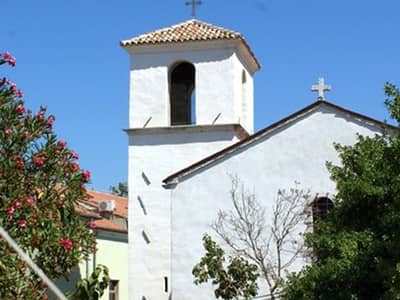
Built in the second half of the 6th century, with a typical Ravenna-like polygonal apse, the church was dedicated to the Blessed Virgin Mary.
After its radical reconstruction around 1200, it was assigned to the Greek Orthodox community in Pula in 1583 formed by immigrants from Cyprus and Nauplion: Today it belongs to the Serbian Orthodox church. It keeps the iconostasis of the Greek master Tomios Batos from the 18th century, valuable icons and other objects.
04